
Why I serve: Dr. Alejandro Aquino – Returning quality of life with a human connection
With a true compassion for his patients, palliative care doctor restores comfort and dignity
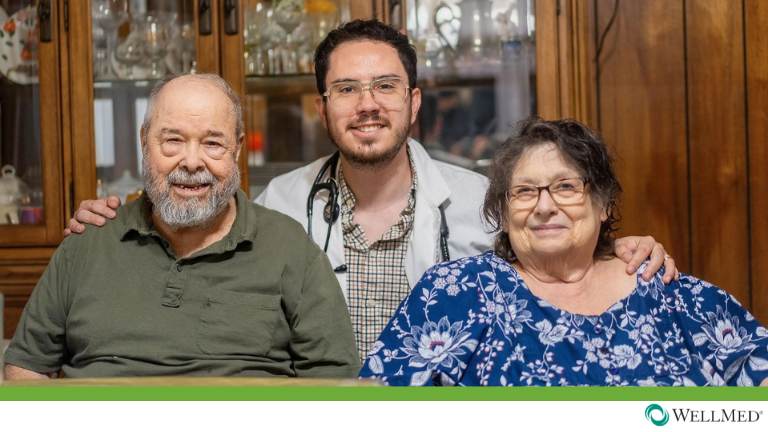
“This is what palliative care does when delivered early and intentionally. It prevents crisis. It prevents unnecessary hospitalization. It restores function. It restores dignity.”
Dr. Alejandro Aquino is soft-spoken and kind. As a palliative care physician with CareCoach Connect, he engages with his patients when they are at their most vulnerable, a time when medicine becomes more than treatment and turns into presence, compassion and understanding. A time when they need someone to not just listen, but to truly hear them. Not just to look at them, but to recognize the person before him in their fullest humanity. In short, he restores their dignity. You only need to talk to or watch him for a few minutes to see it.
Born in the Rio Grande Valley, Dr. Aquino lived in Mexico until high school, when a mentor, helped him on his way to college. He was educated at Duke University, Texas Tech University and The University of Texas RGV, where he earned his bachelor’s in biology, master’s in public health and his medical degree, respectively. His background is rich in research, social and volunteer work. He gives back to the Valley, the place he calls home.
“In the Valley, the people have helped me become who I am,” he said. “I did my undergraduate at Duke thanks to the local scholarships. I am so grateful to be able to give back and help my community in their time of need. We are a very unique demographic with so much potential to reverse the severe chronic illnesses that plague our community. It is my truest calling to continue to educate and promote healthy practices within the nucleus of our society, the family unit.”
“I am now the doctor for the parents of a surgeon who took me under his wing when I was in high school. He pushed me forward and told me I should never give up. My odds were low, but I went to college and came back, and what a pleasure and honor it is to treat these patients.”
Dr. Aquino wrote the story below about one of his patients to share with his leadership. They were so touched that they submitted it for sharing with a wider internal audience.
What this modest, young doctor didn’t write in his story and later shared was this: “She loved me and was so happy when I was with her.”
In his own words: Restoring Breath
By Dr. Alejandro Aquino
Supportive Care, Rio Grande Valley, Texas
When I walked into her home for the first time, her husband opened the door and quietly said, “She’s in the bedroom. She’s too tired to come out.”
I found her sitting up in bed, trying to greet me. Even that small effort left her breathless. She was 85, with advanced pulmonary fibrosis, already on high-flow oxygen at home. Her oxygen numbers were technically acceptable, but she looked like someone fighting for air. You could see it in the way her shoulders lifted with every breath.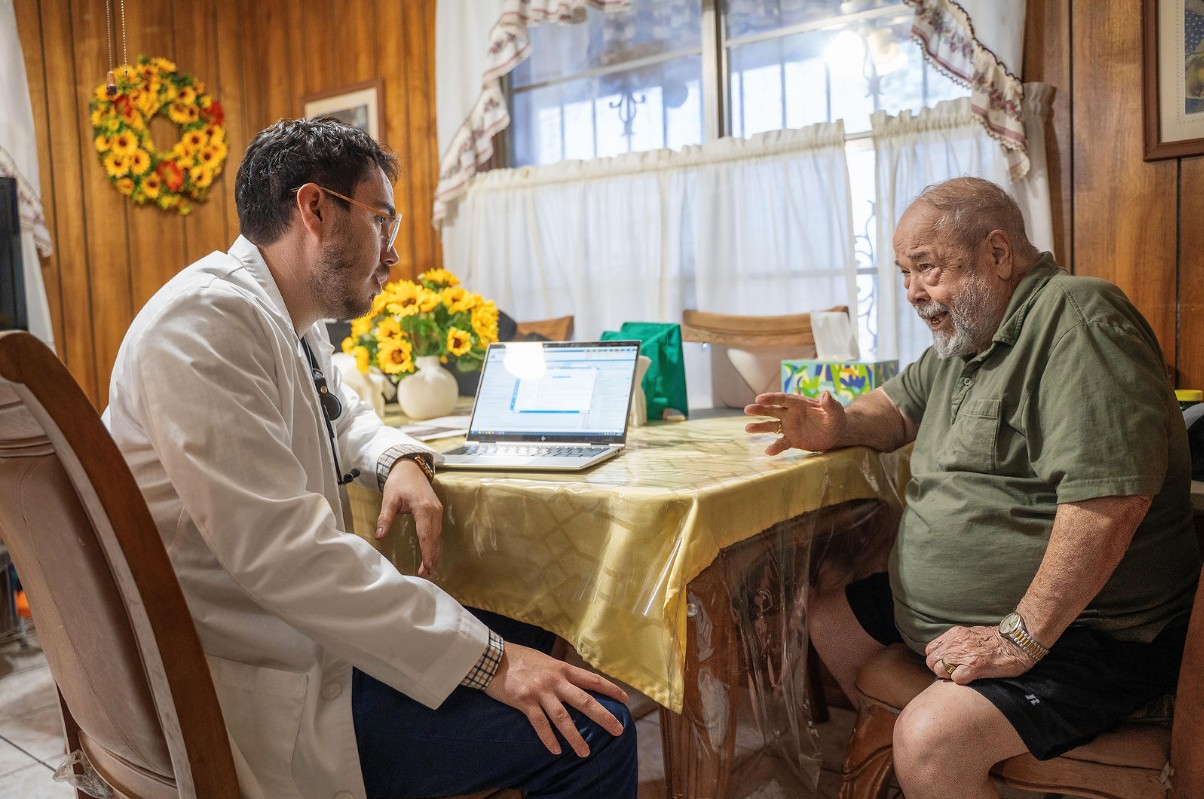
She had already been through specialty care. She had been prescribed antifibrotic therapy but discontinued it due to intolerable side effects. She was on maximum oxygen support at home. She wasn’t sleeping. She was exhausted.
More than anything, she felt unseen.
So, I sat down and I listened. I did not listen merely to let her unburden herself, but to enter the weight of what she was carrying — to stand beside her within it, not outside of it.
Her family kept urging her to “keep fighting.” But no one had stopped to ask what that fight was costing her, what it was taking from her body, her spirit, her will. This is when I told her: It is easy to speak of strength when you are not the one carrying the weight. Strength feels different when every breath is something you have to lift.
And in that moment, something in her shifted. Not because the pain vanished, but because it was finally witnessed. Because someone understood that hope, if it is to mean anything at all, must walk hand in hand with honesty.
We discussed goals. Not cure but comfort. Not prolonging suffering but restoring dignity. We began palliative management immediately. I introduced the concept of hospice for the future, but our immediate objective was symptom relief and stabilization.
Given her severe dyspnea (difficulty breathing) despite adequate oxygenation, I prescribed low-dose liquid morphine to suppress the sensation of air hunger. As expected, there was fear. Morphine carries stigma. It is often misunderstood as surrender rather than therapy.
Even at the pharmacy, the struggle followed her. The prescription was questioned — not maliciously, perhaps, but with a skepticism that placed the burden of proof back onto her, as if her suffering required justification. By the time I called to check in, she was in tears. Her husband, hearing the pharmacist’s concern, believed she should not take it. They left without the medication. I reminded her that this was not about surrender, and it was not about accelerating anything. It was about relieving the sensation of drowning while fully awake. It was about giving her back rest, stability and a measure of control.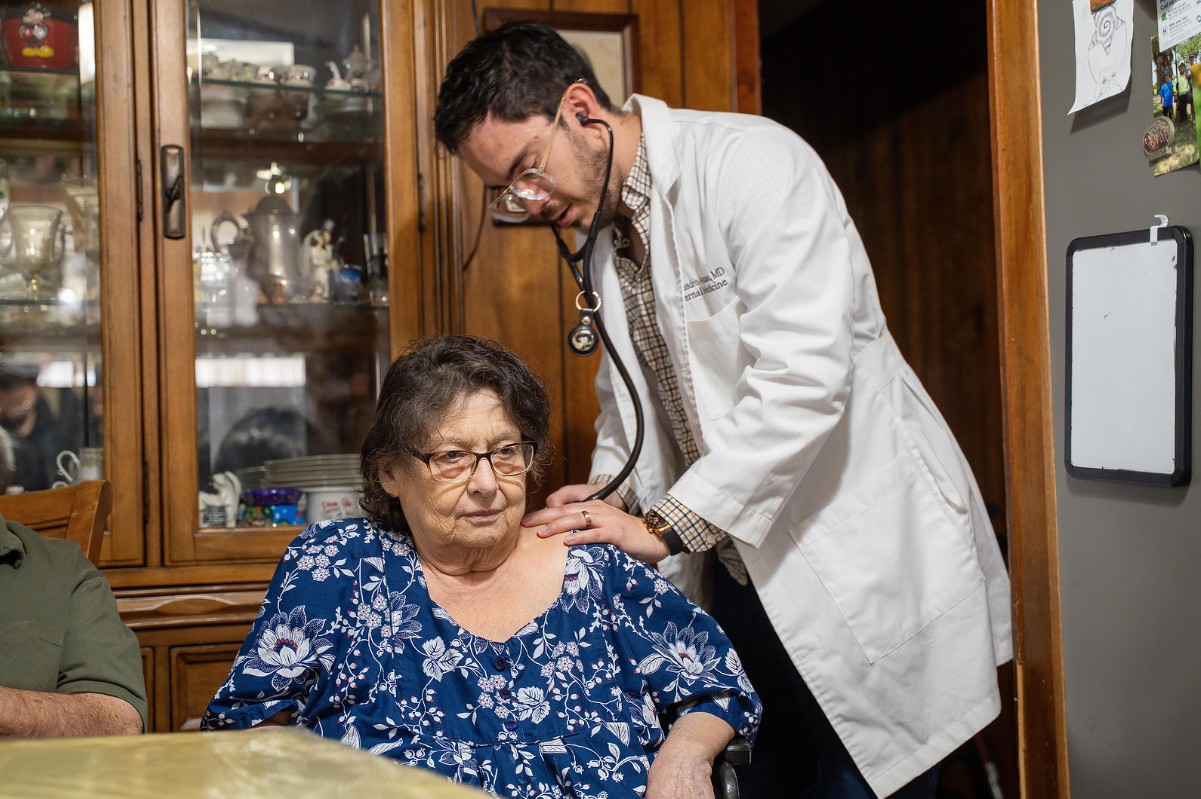
I spoke not only as a clinician, but as someone who had sat beside her and witnessed her distress. I reassured them both that the goal was simple: to allow her to breathe without fear. By the end of that conversation, they agreed to try it.
Two days later, her voice had changed.
She told me she had slept through the night. She was able to walk short distances without panic rising in her chest. The constant edge of crisis had softened.
On our next visit, she was sitting on the couch instead of confined to her bed. She smiled when I walked in. She told me she had gone to the grocery store for the first time in months. She had accompanied her husband out of the house without fearing she would collapse.
More importantly, I witnessed something subtle but profound: they were interacting as partners again. Not adversaries. Not caregiver and burden. Partners.
This is what palliative care does when delivered early and intentionally. It prevents crisis. It prevents unnecessary hospitalization. It restores function. It restores dignity.
In this case, a low-cost intervention, careful education and trust-building changed the trajectory of her disease experience. We did not cure pulmonary fibrosis. But we prevented escalation, avoided acute decompensation (decline) and returned quality of life to a patient who had been preparing only for decline.
This is the work of CareCoach Connect.
- We meet patients at their most vulnerable.
- We address not only the pathology, but the fear, the misinformation and the social barriers that complicate care.
This is not simply symptom management. It is system stabilization through human connection.
Your health is important to us
Interested in learning more about WellMed? We are happy to help. Please contact our patient engagement team at 1-866-323-3601 to schedule an appointment, schedule a clinic tour, RSVP for an event or be connected with a licensed insurance agent.
For all other inquiries, contact WellMed Customer Service at 1-877-370-8115.
Online: By completing and submitting the “Request an appointment” form, you consent to WellMed contacting you to provide the requested information.
Representatives are available Monday through Friday, 8 a.m. to 6 p.m. CST.
New and existing patients
Request an appointment
"*" indicates required fields


